Fargo Special Election: October 6, 2026
|
Fargo Special Election: October 6, 2026 |
Who We Are
Fargo Wards is a citizen-led, nonpartisan group of Fargo residents working to give every part of our city a stronger voice at City Hall.
We believe local government should feel local. Fargo residents should know who represents their part of the city, have someone they can turn to with neighborhood concerns, and feel confident that every area of Fargo has a voice when decisions are made.
Why Wards
Fargo is a city of neighborhoods. As our city has grown, those neighborhoods have developed different needs, experiences, and priorities. We believe every part of Fargo should have a clear voice at City Hall and a council member who is directly accountable to the people who live there.
We believe our system of representation should keep up with our growing city.
Under a ward system, each part of Fargo would have a council member elected by the people who live there; someone who knows the area, listens to residents, brings local concerns to City Hall, and is directly accountable to the people they represent.
Ward council members would still make decisions for Fargo as a whole, but every part of the city would have someone from their area at the table.
Our Story
Fargo Wards began with local residents asking a simple question:
As Fargo grows, how can we make sure every part of the city has a voice at City Hall?
That question brought Fargo residents, from a variety of backgrounds, together around the idea of electing city council members from geographic wards.
Volunteers researched, talked with neighbors, organized across the city, gathered petition signatures, and earned the opportunity for Fargo voters to decide whether this is the right next step for our community.
Now, the decision belongs to Fargo voters.
On October 6, voters will decide whether Fargo should continue electing all city commissioners citywide or move to a ward system that gives each part of Fargo a designated representative.
Meet the People Behind Fargo Wards
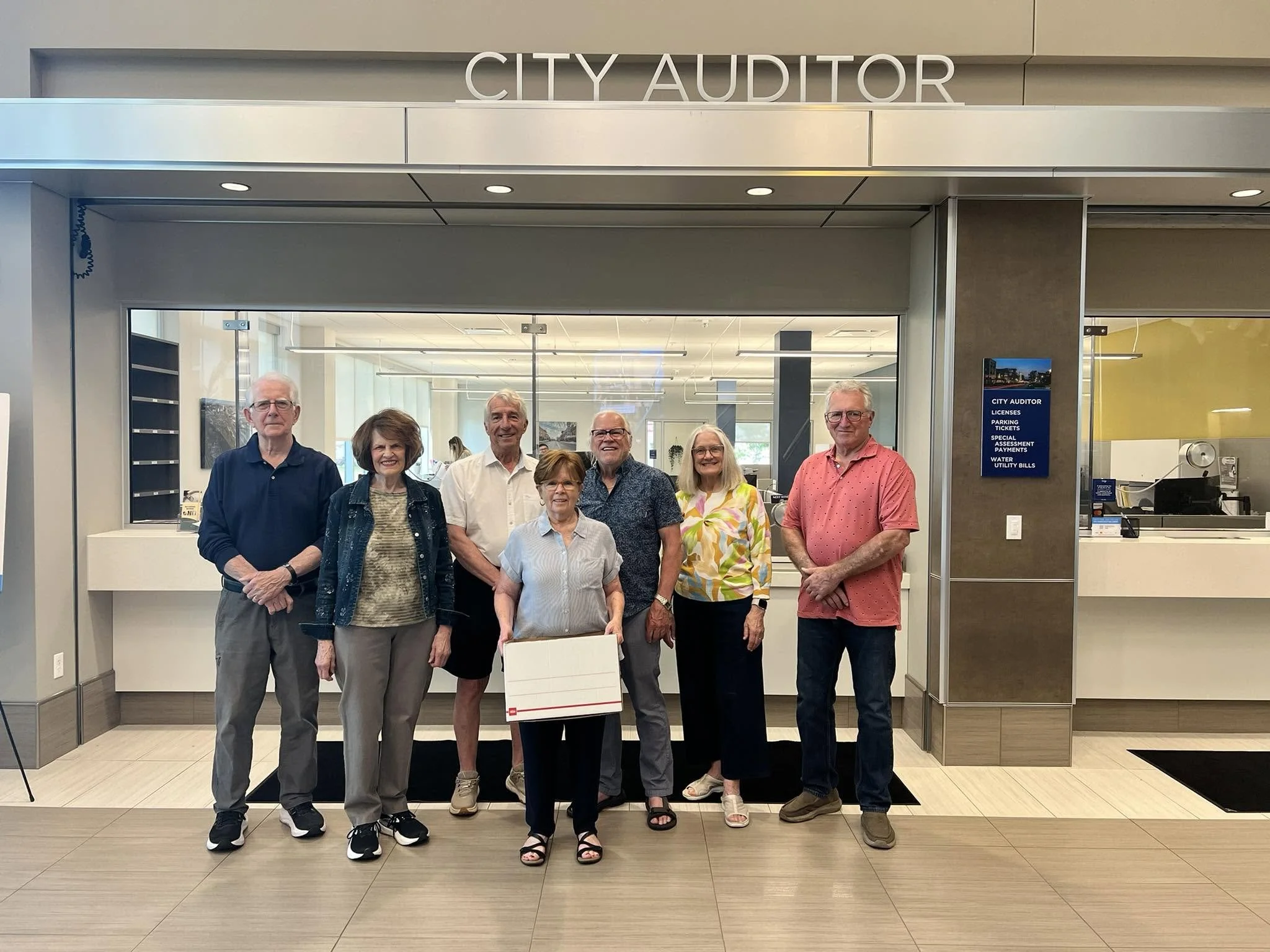
Fargo Wards is powered by Fargo residents who care about their neighborhoods and the future of our city.
Our volunteers and supporters come from different parts of Fargo and bring different experiences and perspectives. What brings us together is a shared belief that residents should have a stronger connection to City Hall and confidence that their part of Fargo is represented when important decisions are made.
“People would get to know their council member and know who they could contact if they have a concern, and then expect a response from them, and that accountability between the elected official and the neighborhood becomes stronger.”
- Arlette Preston, former Fargo City Commissioner
“You can say that you represent the whole city as a commissioner, but you can’t understand the needs and wants of each neighborhood.”
- Tony Gehrig, former Fargo City Commissioner
“I want to know who represents my part of Fargo (far south Fargo) and I want that person to know our neighborhood, listen to us, and bring our concerns to City Hall.”
-Carolyn B, South Fargo Resident
“As Fargo has grown, it has become harder to feel connected to the decisions being made at City Hall. I support wards because every neighborhood deserves to know there is someone at the table who knows their part of the city and is listening to the people who live there.”
-Karen E, North Fargo Resident
Our Commitment
Fargo Wards is a nonpartisan, locally led effort focused on strengthening representation in Fargo city government.
We are committed to giving voters clear and accurate information about the ward proposal, answering questions about how it would work, and having respectful conversations with residents across the city.
We believe wards are a responsible update for a growing Fargo—one that can create a closer connection between residents and City Hall while keeping the focus on what matters most: making good decisions for the entire city.
Six Wards. One Fargo.
Join the Effort
This campaign is powered by Fargo residents, and there are many ways to be part of it.
Talk with your neighbors. Knock on doors. Make calls. Help distribute materials. Sign up for updates. Or simply help more Fargo residents understand what wards could mean for their neighborhood.
Help give every part of Fargo a local voice at City Hall.
Council vs Commission
Comparing Forms of City Governance:
Council
Members elected from wards
A member representing a ward must live in the ward and be elected by residents in that ward
Guarantees representation across the entire city
City council members don’t have direct operational responsibilities for departments
The City Administrator is accountable for managing daily operations
The City Council has accountability for oversight of the overall budget, planning, and policies
The Mayor’s role: 1) CEO of the city, 2) does not vote on every issue, 3) has veto power (which can be overridden with 2/3 Council vote), and votes as a tie-breaker
Commission
Members elected at large
Members can live anywhere in the city and elected by all residents
No guarantee that commissioners will be elected from across the entire city
Commission members have direct oversight for assigned departments on budgeting, planning, and policy issues
Mayor's role: 1) CEO of the city and 2) votes on every issue with the same weight as every other Commission member
Fargo Wards Petition FAQs
-
Currently, Fargo City Commissioners are elected at-large, meaning the entire city votes for all positions on the commission.
The City Council system sets up wards where each council member would be elected by voters in that ward.
-
If Fargo voters approve our ballot measure, there will be a total of 7 Fargo City Council members.
Fargo’s mayor would be a member of the Council and still be elected by all the voters in Fargo. This means there would be 6 wards to elect the other Council members.
Each candidate for a certain ward would need to live inside that ward and be elected by the residents in that ward. This would ensures a more equitable representation for all neighborhoods and residents across the City.
-
There would be 6 wards.
-
An independent committee would be appointed by the City Commission to draw the ward boundaries. The wards must have equal population (about the same number of people in each ward) and contiguous (all parts of the ward must be connected to form a single shape).
The boundary committee would make a recommendation of the map of the wards to the City Commission for their approval.
-
Fargo’s mayor would still be elected by all residents of the city. With a City Commission, the Mayor is one of five Commissioners and votes on every issue brought to the Commission.
With a City Council, the Mayor’s role is considered a “strong Mayor” role because they have veto power and will be a tie-breaking vote when needed.
-
Fargo is large enough to have neighborhoods with different concerns and needs and representation on the Council should reflect that.
Fargo is the only city in the entire country with a population greater than 100,000 that still has the Commission form.
-
This change will add two additional Council members. The salary for a current member is about $27,000 per year. With benefits added in, the cost will be approximately $70,000 per year.
-
The City Commission will appoint the boundary-setting committee which will recommend the boundaries to the Commission. Once the boundaries are set, the City Commission will set an election date for the new City Council members.
The 6 members will have staggered terms so that 3 people will initially have a 2-year term and the other 3 will have 4-year terms. Once the City Council is in place, all terms will be 4-year terms.
-
A sitting City Commissioner could run for a City Council seat for the ward they reside in. If there are two current City Commissioners living in the same ward, they would need to compete for that seat alongside any other candidates from that ward.
-
Wards will make it easier for people to run for City Council. It will reduce barriers for candidates, because it will be less expensive and less overwhelming to engage voters in one ward rather than the entire city.
Running for a position from a ward makes door-to-door campaigning possible, so the candidate would get to know the concerns of the neighborhood they are representing.
Residents of the ward would know who their elected official is and who to contact about a concern. When you know who represents you, it’s easier to reach out to them.
-
Grand Forks has had a City Council + Ward system since they were incorporated in 1881.
-
To sign the petition, you must be at least 18 years old, a US citizen, and a resident of Fargo for at least 30 days.
Follow us on Facebook to see where our volunteers will be next for you to sign it.